{{ ch.num }}
{{ ch.kicker }}
{{ ch.title }}
{{ ch.desc }}
{{ ch.quote }}
A NEW BOOK BY MILTON ALLIMADI
Biafra died as an independent republic in January 1970. But the Biafran story—and the questions raised by its rise and death—did not. The result has been a major resurgence of Biafran nationalism in the 21st century. This resurgence makes it all the more important to understand what happened in the final, critical months, when Biafra’s fate was still uncertain and when possible U.S. recognition—which Nixon seemed on the verge of granting—might have changed the course of history.
An archival investigation into the Biafran War, the journalists who covered it, and the political decisions that shaped its fate.
What began as an investigation into the correspondence of New York Times correspondent Lloyd Garrison became a much larger story—one involving Biafra, U.S. foreign policy, President Richard Nixon, Gen. Chukwuemeka Odumegwu Ojukwu, and a forgotten humanitarian tragedy.
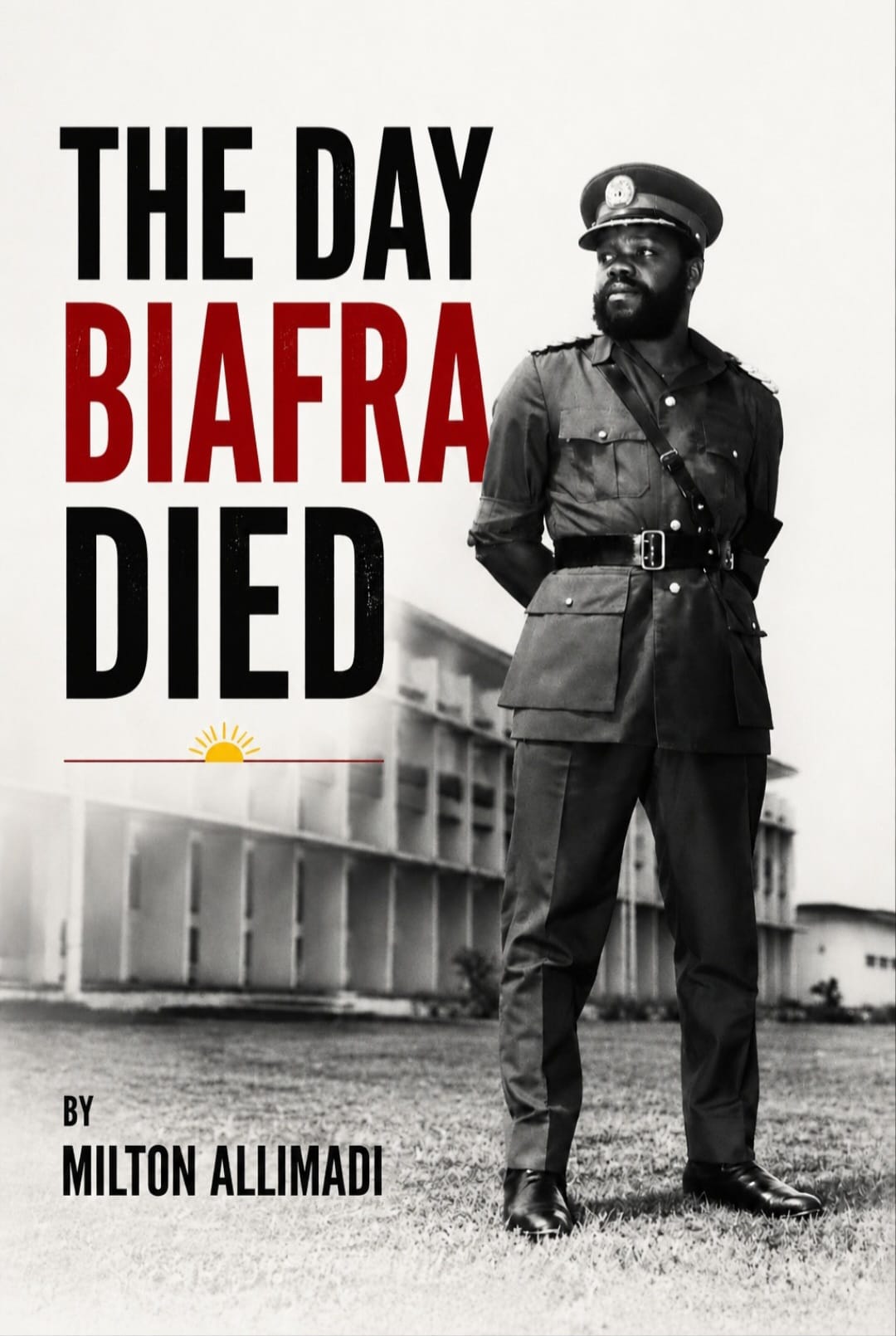
BY MILTON ALLIMADI
BY MILTON ALLIMADI
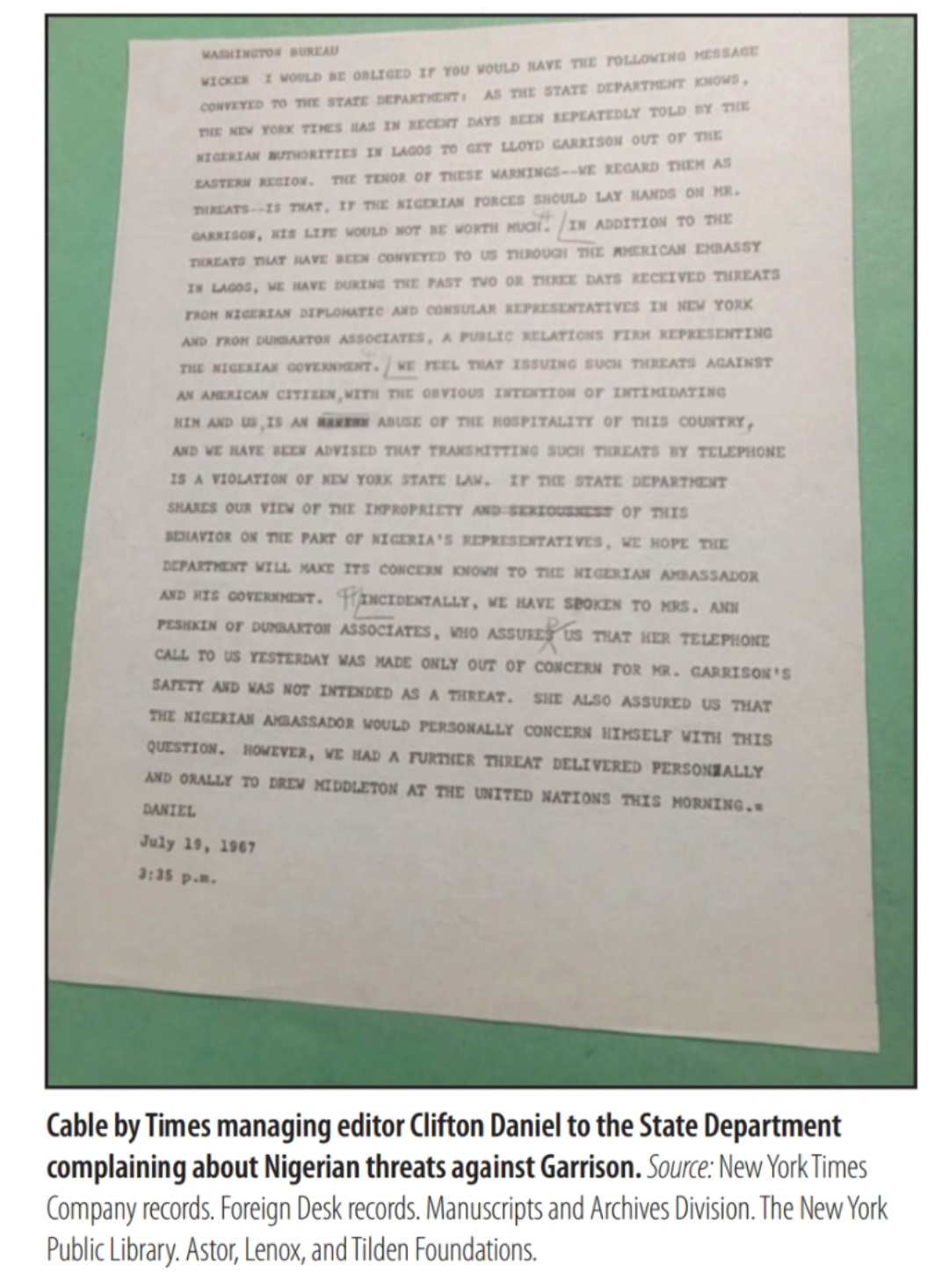
This book originated in the archives of The New York Times, where Milton Allimadi discovered correspondence between the paper's editors and the U.S. State Department concerning correspondent Lloyd Garrison, who covered the Biafran War.
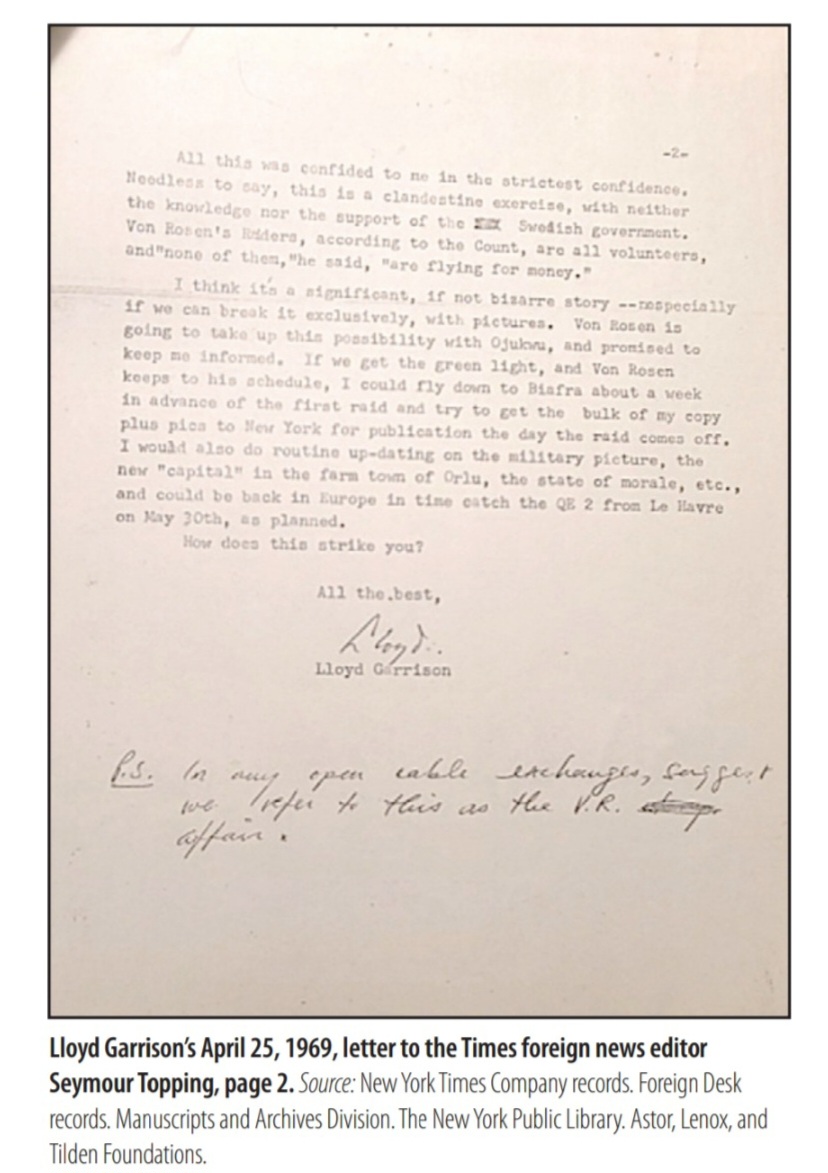
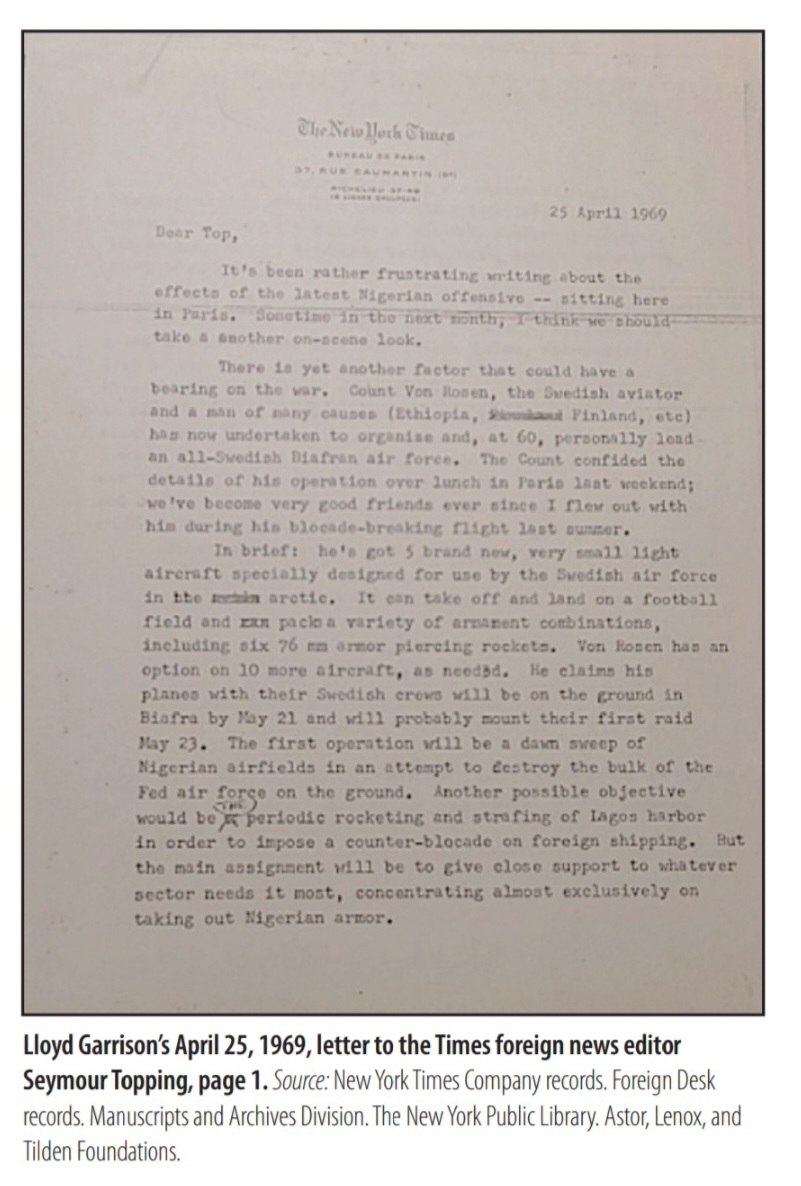
That discovery led him deeper into the archival record—letters revealing Garrison's relationship with the Swedish aviator Count Gustaf von Rosen, who later helped Biafra establish its embryonic air force.
The research eventually expanded into U.S. State Department and White House memoranda—and into the role President Richard Nixon played in the war's fate.
FROM THE ARCHIVES
REVELATION 01
01
“The New York Times knew of Biafra's air force attack on Nigerian targets a month in advance.”
REVELATION 02
02
“Richard Nixon seemed on the verge of recognizing Biafra until a decision by Gen. Ojukwu derailed the process.”
THE RESEARCH JOURNEY
“I had not planned to write The Day Biafra Died.”
01
In The New York Times archives, Allimadi encountered correspondence between the paper's editors and the U.S. State Department concerning the safety of correspondent Lloyd Garrison during the Biafran War.
02
Returning to the archives, he read letters revealing Garrison's friendship with Swedish aviator Count Gustaf von Rosen—and the paper's advance knowledge of Biafra's planned air operations.
03
The investigation moved beyond journalism into U.S. foreign policy—State Department and White House memoranda revealing Nixon's far more active role in the war than previously imagined.
04
The research became a larger story combining Garrison's extraordinary relationship with Biafra, Nixon's evolving policy toward the conflict, and Gen. Ojukwu's fateful decision.
01
Built from historical records and archival research—the internal files of a major news organization and declassified government documents.
02
Explores the role of The New York Times and correspondent Lloyd Garrison—a rare, documented glimpse into foreign correspondence in an African war zone.
03
Examines U.S. government records and the Nixon administration's evolving policy toward the conflict—from neutrality to a decisive tilt toward Biafra.
AUGUST HARVEY MARTIN · 1919–1968
August Harvey Martin, a former Tuskegee Airman, made history in 1955 when Seaboard World Airlines hired him as the first African American commercial airline captain.
Driven by humanitarian concern, he volunteered to fly hazardous nighttime relief missions delivering food to blockaded Biafra.
On June 30, 1968, while attempting to land at the Uli airstrip during a severe tropical rainstorm, his aircraft crashed.
The tragedy also took the lives of his wife, Gladys Frank Riddle Martin, and two Red Cross representatives.
FROM THE BOOK
INTRODUCTION
I had not planned to write The Day Biafra Died. My research discoveries simply led me in the direction that eventually produced this book.
Many years ago, while researching The New York Times archives—a project that ultimately led to two books, The Hearts of Darkness: How White Writers Created the Racist Image of Africa, which I self-published, and Manufacturing Hate: How Africa Was Demonized in Western Media, published by Kendall Hunt—I stumbled upon correspondence between The New York Times editors and the US State Department concerning the safety of one of the paper's correspondents, Lloyd Garrison, who covered the Biafran War.
Garrison, who had been expelled by Nigeria's Federal Military Government (FMG), had managed to make his way into Biafra, the breakaway region that had declared its independence under Gen. Chukwuemeka Odumegwu Ojukwu. From there, he continued filing stories for The New York Times. I remember reading a memorandum from the paper's editors to the State Department expressing alarm that the FMG had made it clear Garrison's life would be in danger if federal troops captured him.
The episode struck me as a fascinating glimpse into the realities of foreign correspondence in an African war zone—an aspect of journalism that readers rarely see documented in such detail through the internal records of a major news organization. Although decades passed, I always intended to revisit that story, dig deeper into the archives, and, if possible, locate Garrison's own correspondence describing what had happened and how the episode was ultimately resolved.
When I first conducted research in The New York Times archives, I was a graduate student at Columbia University's Graduate School of Journalism from 1991 to 1992. My findings formed the foundation of my master's research project, "Darkest Times in Africa," which examined the newspaper's coverage of Africa from the 1850s through the 1990s and the racial assumptions that underpinned much of both its reporting and commentary. At the time, the archives were housed in a separate building. Today, they are located in the main branch of the New York Public Library in Midtown Manhattan.
Over the past three years, I have returned to the archives periodically, examining the papers of various New York Times correspondents who reported from Africa over several decades. Beginning in the fall of 2025, I focused once again on Garrison's files and made an unexpected discovery.
From my earlier research, I already knew that Garrison had been sympathetic to Biafra. What I did not know was the extent of that commitment.
For the first time, I read letters exchanged between Garrison and his editors revealing that he had befriended the Swedish aviator and adventurer Count Gustaf von Rosen, who later helped Biafra establish its embryonic air force, which launched military attacks against Nigeria. Garrison knew about the proposed Biafran air force and its planned operations well before the attacks took place. He would later report on those same operations from Biafra for The New York Times.
I decided to use these archival materials to write what I envisioned as a relatively slim volume focusing on this previously unreported episode of the Biafran War: that The New York Times knew about the planned military attacks against Nigeria more than a month before they occurred—and, presumably, well before the Nigerian military government led by Gen. Yakubu Gowon.
I believed such a book would interest journalists, Nigerians, students of African history, and anyone curious about the role that two Europeans played in this remarkable chapter of Nigeria's history.
I also wanted to know whether the Nixon administration, which was in office during much of the Biafran War, had been aware that The New York Times possessed advance knowledge of the planned attacks. That question led me into the historical archives of the US State Department, a resource I had explored in previous years, although never for a specific book project.
What I discovered surprised me.
As I worked through State Department and White House memoranda, it became clear that President Richard Nixon had played a far more active role in the Biafran War than I had ever imagined. Initially, he sought to pressure both Gen. Gowon and Gen. Ojukwu to permit a significant increase in relief shipments for starving Biafrans. Later, he wanted to abandon the official US policy of neutrality and tilt decisively toward Biafra—perhaps even extend recognition.
At that point, I realized the book could no longer be simply about Lloyd Garrison's partisan role in the war. It had become a larger story—one that combined Garrison's extraordinary relationship with Biafra, Nixon's evolving policy toward the conflict, and, ultimately, how Gen. Ojukwu appears to have made a fateful decision that contributed to the death of Biafra.
As my research expanded, I also came to appreciate another important distinction. The Biafran War differed fundamentally from another major African conflict involving secession: the Congo Crisis of the early 1960s.
The Congo conflict had a pronounced ideological dimension. On one side stood Prime Minister Patrice Lumumba, the nationalist and Pan-African leader who had been mentored by Kwame Nkrumah, one of the foremost advocates of a United States of Africa. On the other stood Moise Tshombe, who was widely regarded across Africa as a Western puppet and an agent of neocolonialism.
Lumumba enjoyed the sympathy of African nationalists, Pan-Africanists, the socialist countries, the Soviet Union, and the Eastern bloc. Tshombe, by contrast, was backed by the Western capitalist powers—primarily the United States and Belgium, the former colonial power—as well as powerful financial and mining interests.
The Nigerian Civil War lacked that same ideological divide. Ironically, the United Kingdom and the Soviet Union—Cold War adversaries—found themselves supporting the same side, backing the Federal Military Government against Biafra.
Yet my research uncovered another revealing irony. Both Gen. Gowon, who led the Nigerian military government, and Gen. Ojukwu, who led Biafra, were viewed by American officials as members of the new African bourgeois elite. At the same time, even though France supplied Biafra with hundreds of millions of dollars' worth of weapons during the war, French officials viewed Ojukwu with wary eyes. According to documents in the archives of the US State Department, they believed that even if Biafra had survived as an independent state, Ojukwu would eventually have been overthrown by Biafran leftist intellectuals.
That is how this book came to be.
The Biafran War also claimed the life of an American who is frequently overlooked in historical accounts: August Harvey Martin. A former Tuskegee Airman, Martin made history in 1955 when Seaboard World Airlines hired him as the first African American commercial airline captain. Driven by humanitarian concern, he volunteered to fly hazardous nighttime relief missions delivering food to blockaded Biafra. On June 30, 1968, while attempting to land a Lockheed L-1049G Super Constellation at the Uli airstrip during a severe tropical rainstorm, his aircraft crashed. The tragedy also took the lives of his wife, Gladys Frank Riddle Martin, and two Red Cross representatives.
I wanted to thank all friends and family members who read the manuscript and provided feedback. Special thank you to Merron Lemma who has sharp eyes and whose editing was exceptional.
Milton Allimadi, New York City.
September 1, 2026
Three chapters. One archival trail — from a Paris lunch table to the front lines of a blockaded republic.
{{ ch.num }}
{{ ch.kicker }}
{{ ch.desc }}
{{ ch.quote }}
A journey through archives, journalism, war and political decision-making.
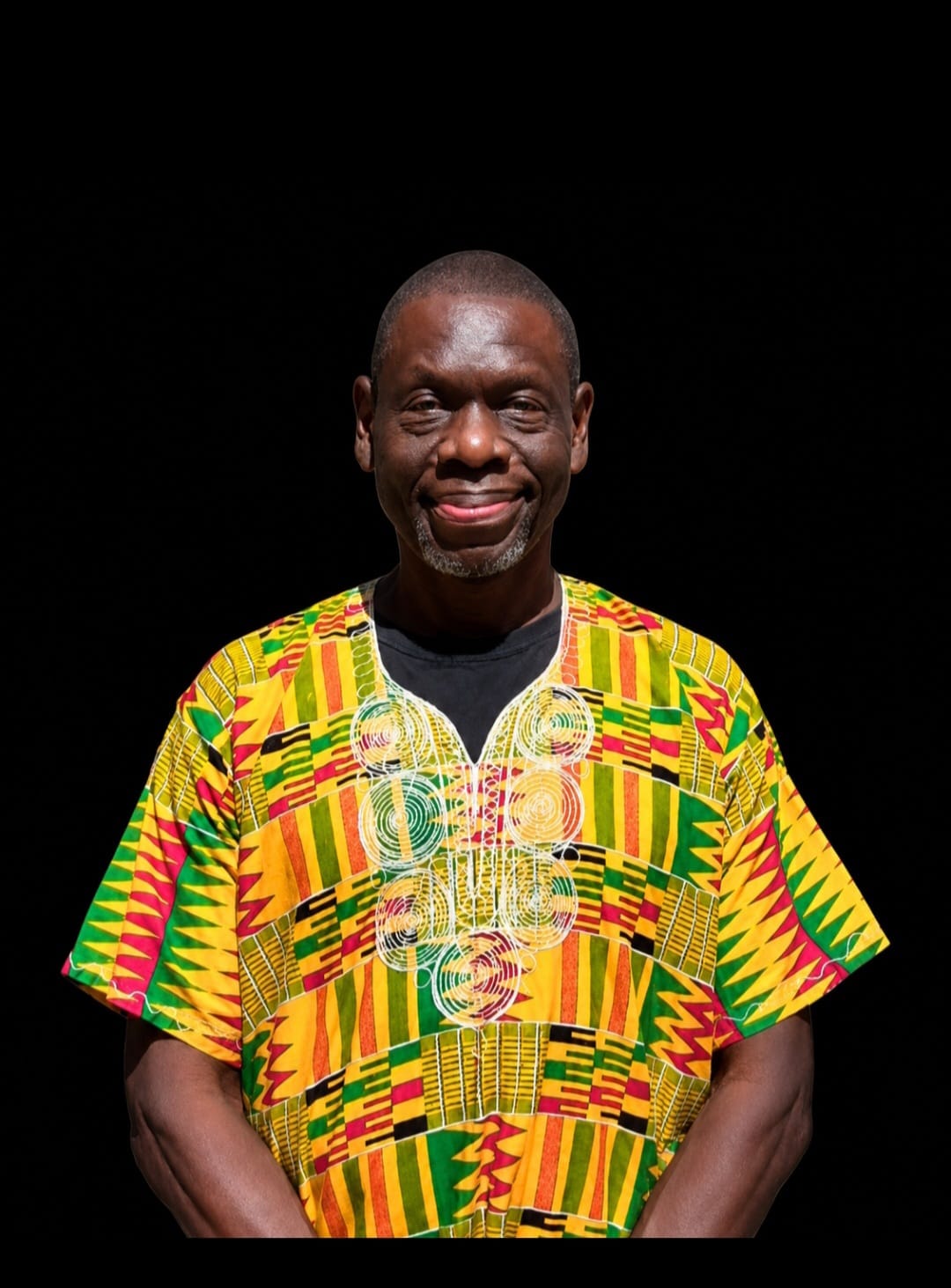
THE AUTHOR
Milton Allimadi is a co-founding publisher of Black Star News and hosts a radio show on WBAI FM New York.
He is a PhD student in history at Howard University, and has taught as an Adjunct Professor at John Jay College of the City University of New York and at the Graduate School of Journalism at Columbia.
He is the author of The Hearts of Darkness: How White Writers Created the Racist Image of Africa and Manufacturing Hate: How Africa Was Demonized in Western Media.
CONTACT — MALLIMADI@GMAIL.COM

THE DAY BIAFRA DIED
BY MILTON ALLIMADI
An archival investigation into journalism, politics, war and the forces that shaped one of Africa's most consequential conflicts.
Be among the first to discover Milton Allimadi's archival investigation into the Biafran War.
“”
Reader endorsements, reviews and press commentary will appear here as they arrive.
{{ p.label }}
{{ p.note }}
Receive updates about The Day Biafra Died, new writing, interviews, historical research and commentary from Milton Allimadi.
THANK YOU — YOU ARE ON THE LIST.
THE DAY BIAFRA DIED
BY MILTON ALLIMADI
BOOK LAUNCH — SEPTEMBER 20, 2026
BUY THE BOOK →